
EVing isn’t
easy
Rivian needed to boost efficiency while simplifying its complex tools for production
my role
Lead product designer through end to end process: discovery, user research, requirements gathering, and design
team
Ashley Putnam, Lead Product Designer
Loan Lu, Product Designer
Michael Powers, Engineering Lead
Caleb Watters, Engineering
Sean Watters, Engineering
Eric Weaser, Project Manager
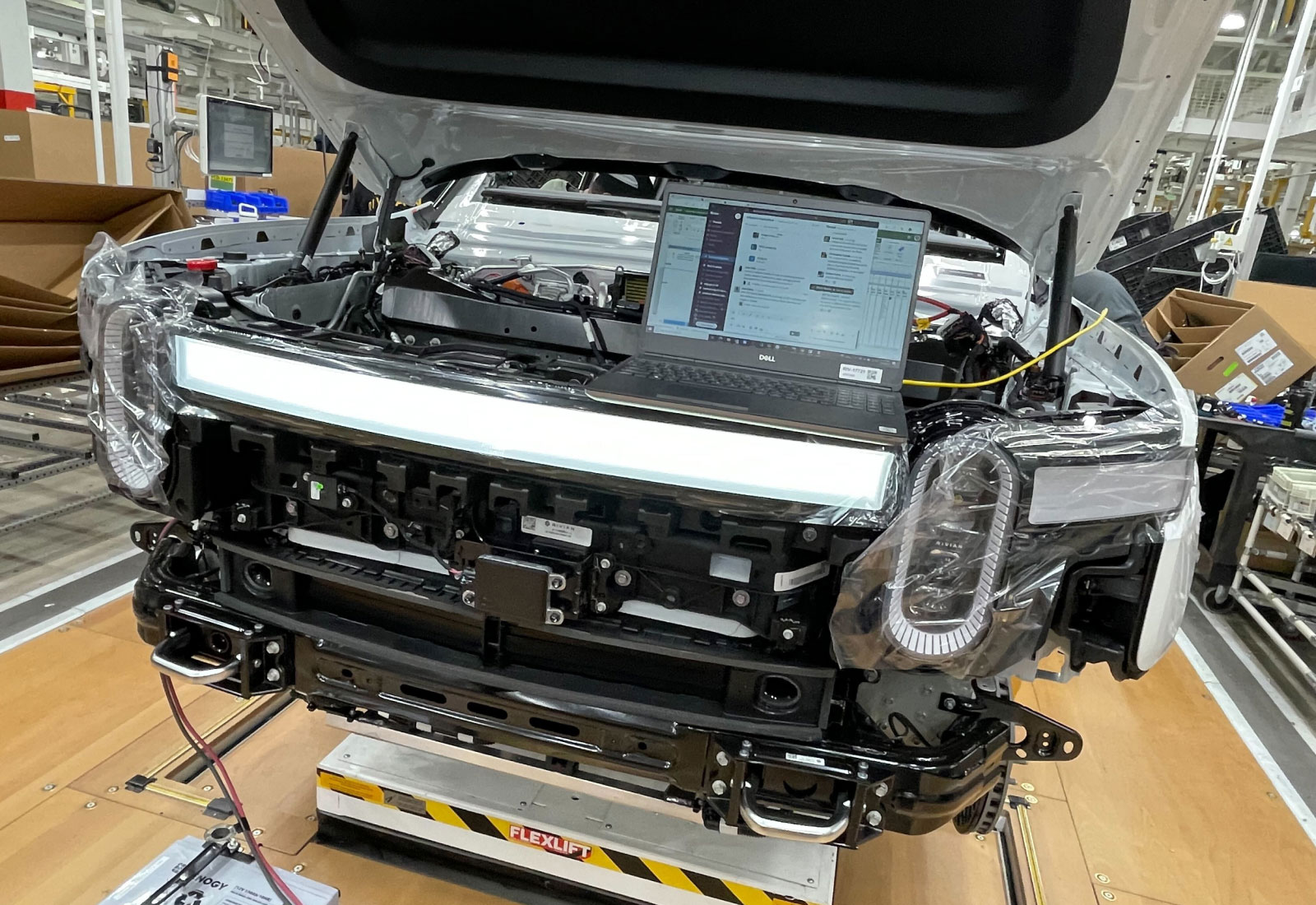
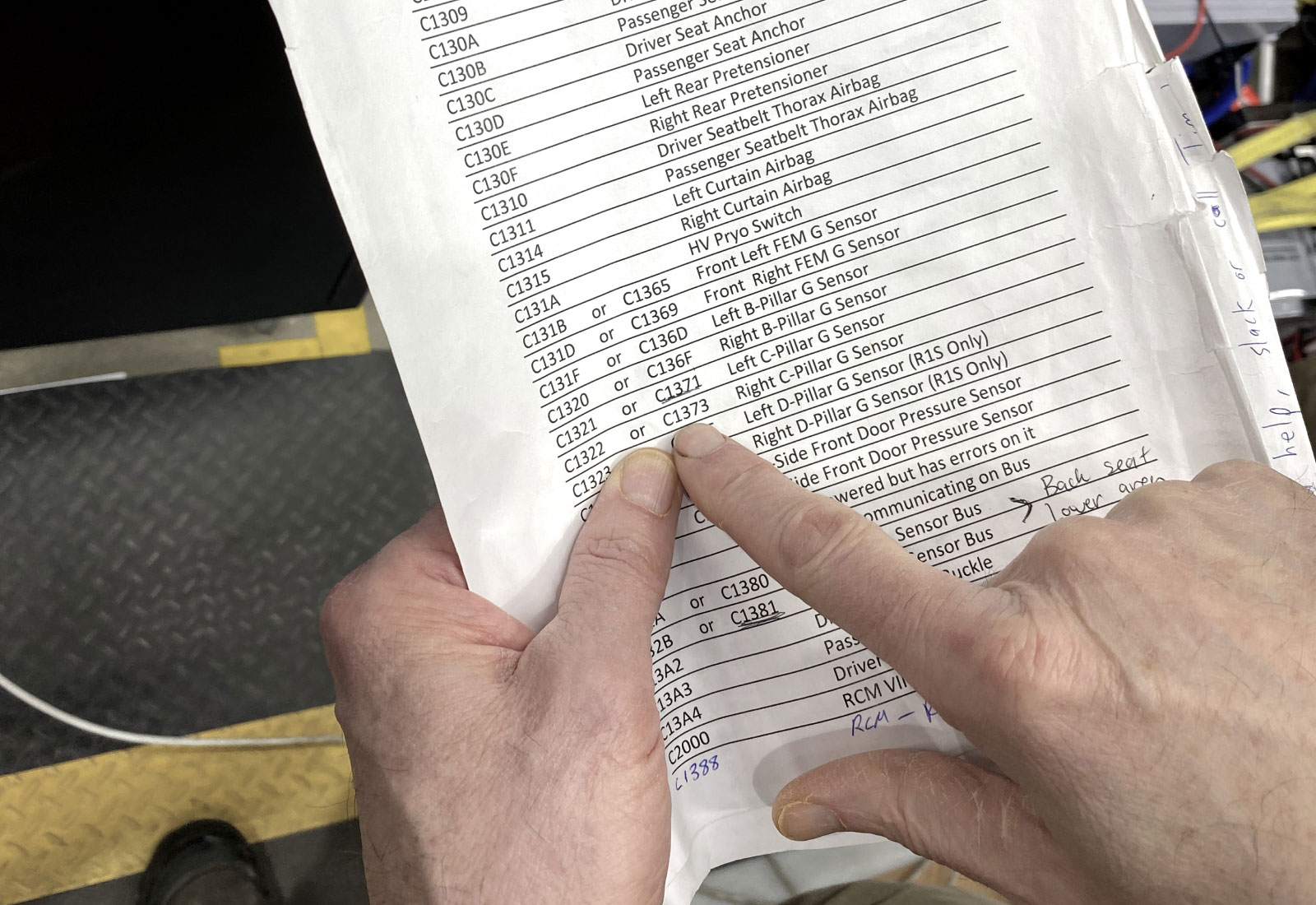
Learn to make more with less time
After years of testing and preparation, Rivian was ready to produce their vehicles at rapid scale so that everyone could join the electric adventure. To meet demand, manufacturing would have to increase and times would have to be reduced.
The current tools served a purpose, but were no longer sustainable with current and future needs. New tools would have to be built for the users building various software and hardware recipes. The team was challenged to reduce downtime, make the system reliable, and improve the experience in all conditions for the various users
(Key) issues slowing drive
System Latency
Due to system architecture and 3rd party integrations, tools run slowly ultimately affecting production
Indefinite Scroll
Tools created impediments to make quick fixes for firmware updates or module issues
At a Distance
Important interfaces aren't viewable at a distance nor do they contain the correct information for the task at hand
Version Uncontrol
Lack of change management for station updates leads to duplication and errors
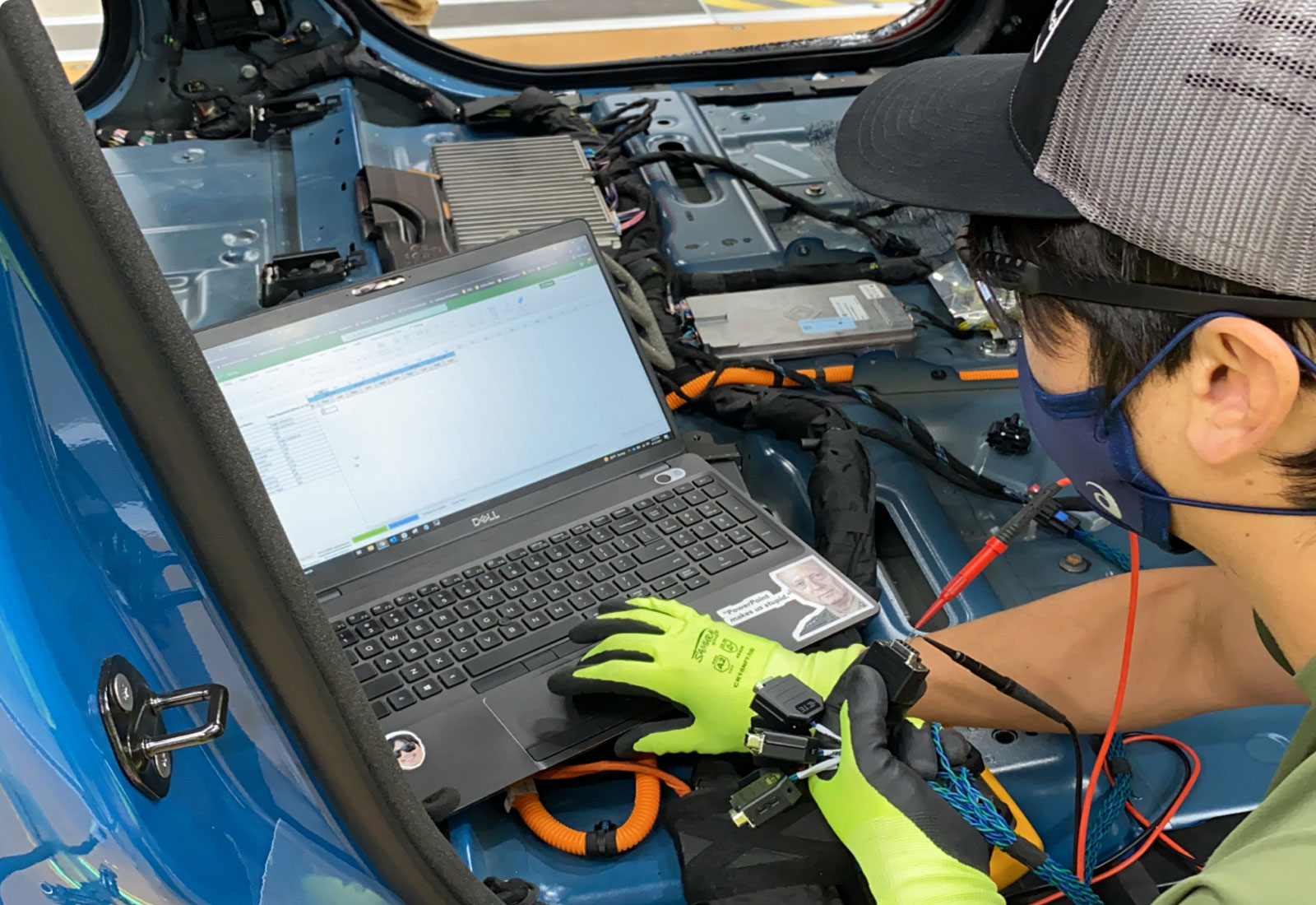
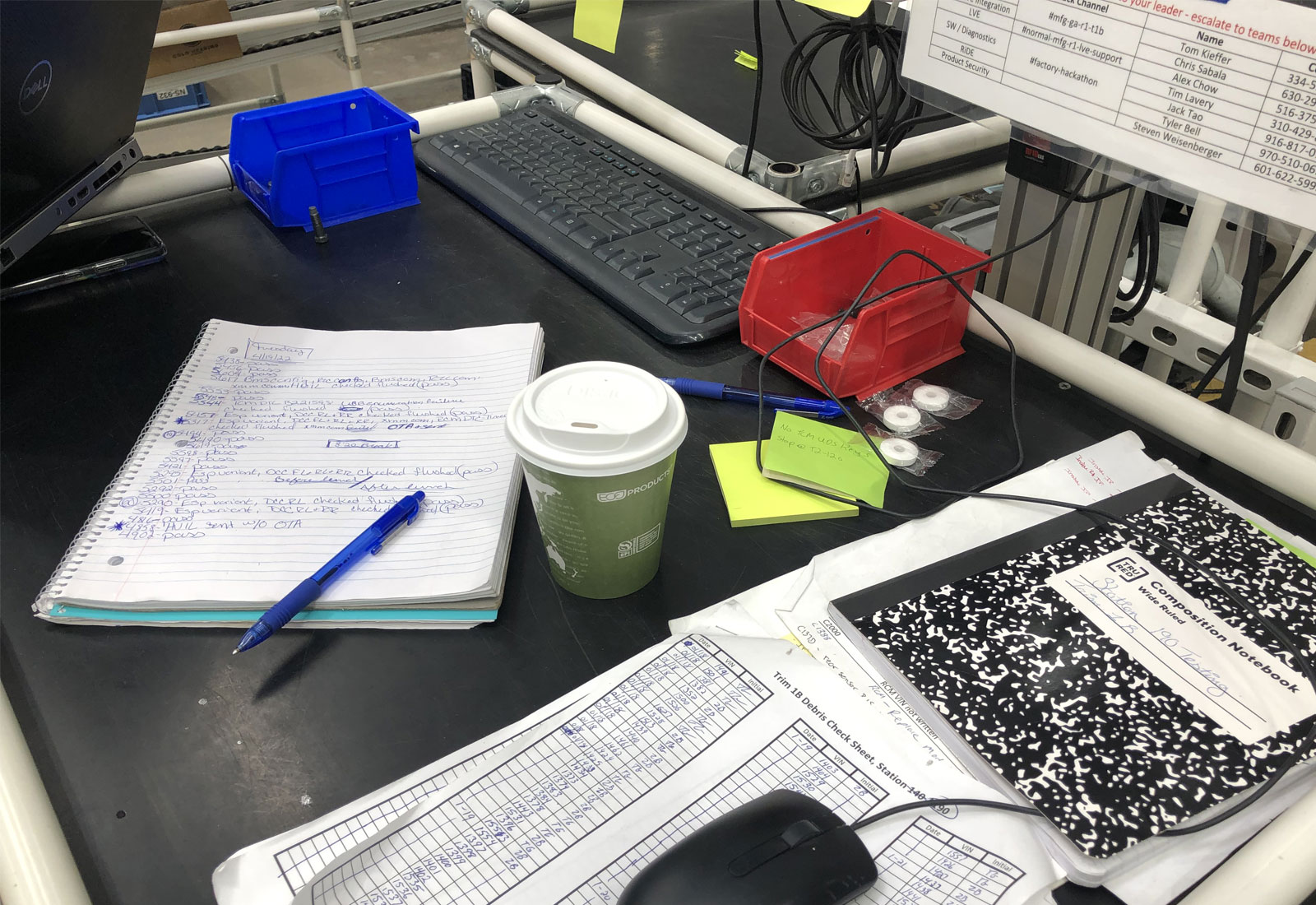
Manufactured for many users
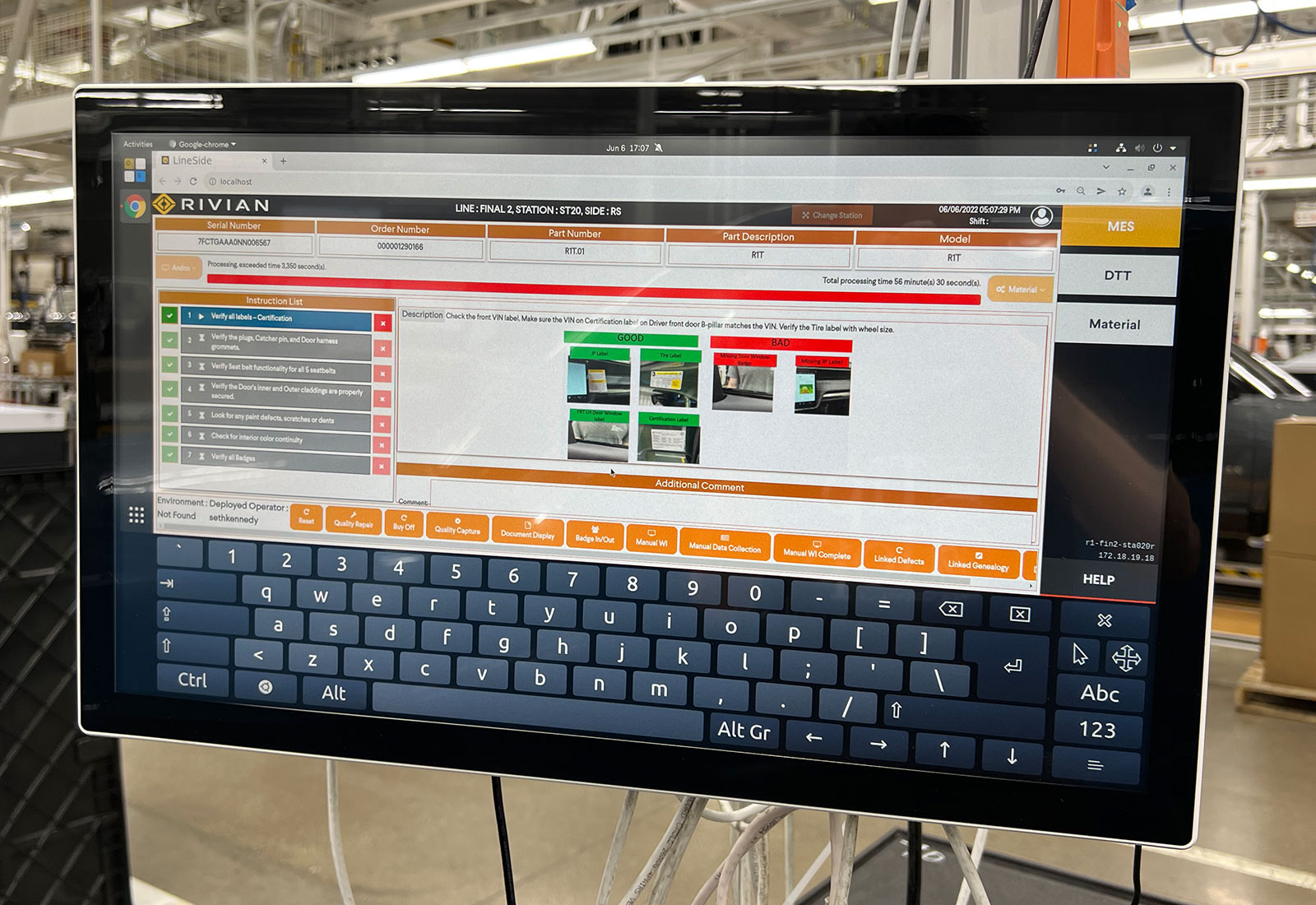
The new tool had to be built for multiple users in multiple modes. Each user interacting with the data on different devices.
Team Members
(Operators)
Perform actions at each station to produce the vehicle
Line
Leader
Oversee activities within their line and take actions if/when necessary
Quality
Engineer
Review results of stations and help determine proper actions and how to improve the process
Manufacturing
Engineer
Build and edit recipes for stations in the factory that will be executed on the terminals
Building a recipe for success
Working with stakeholders and product management, we determined the next steps to address the needs for users responsible for building recipes. On one side, engineers needed a tool to easily view, edit, and publish new station recipes.
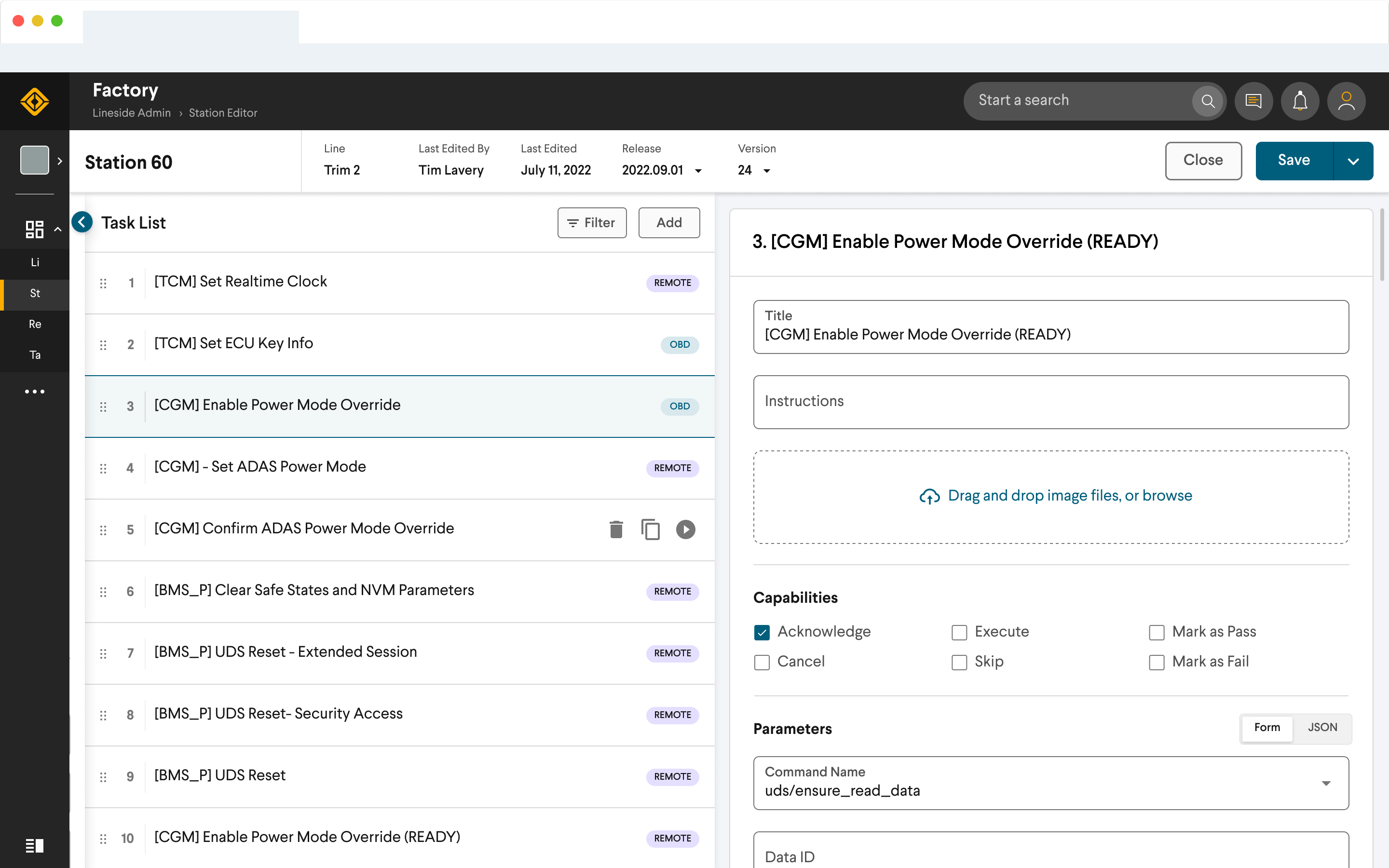
Lineside Admin
To power efficiency and speed on the line, manufacturing engineers needed the ability to easy view and edit tasks.
Users can easily view, add, and edit new tasks from this view. They can also change the order of the tasks by dragging and dropping.
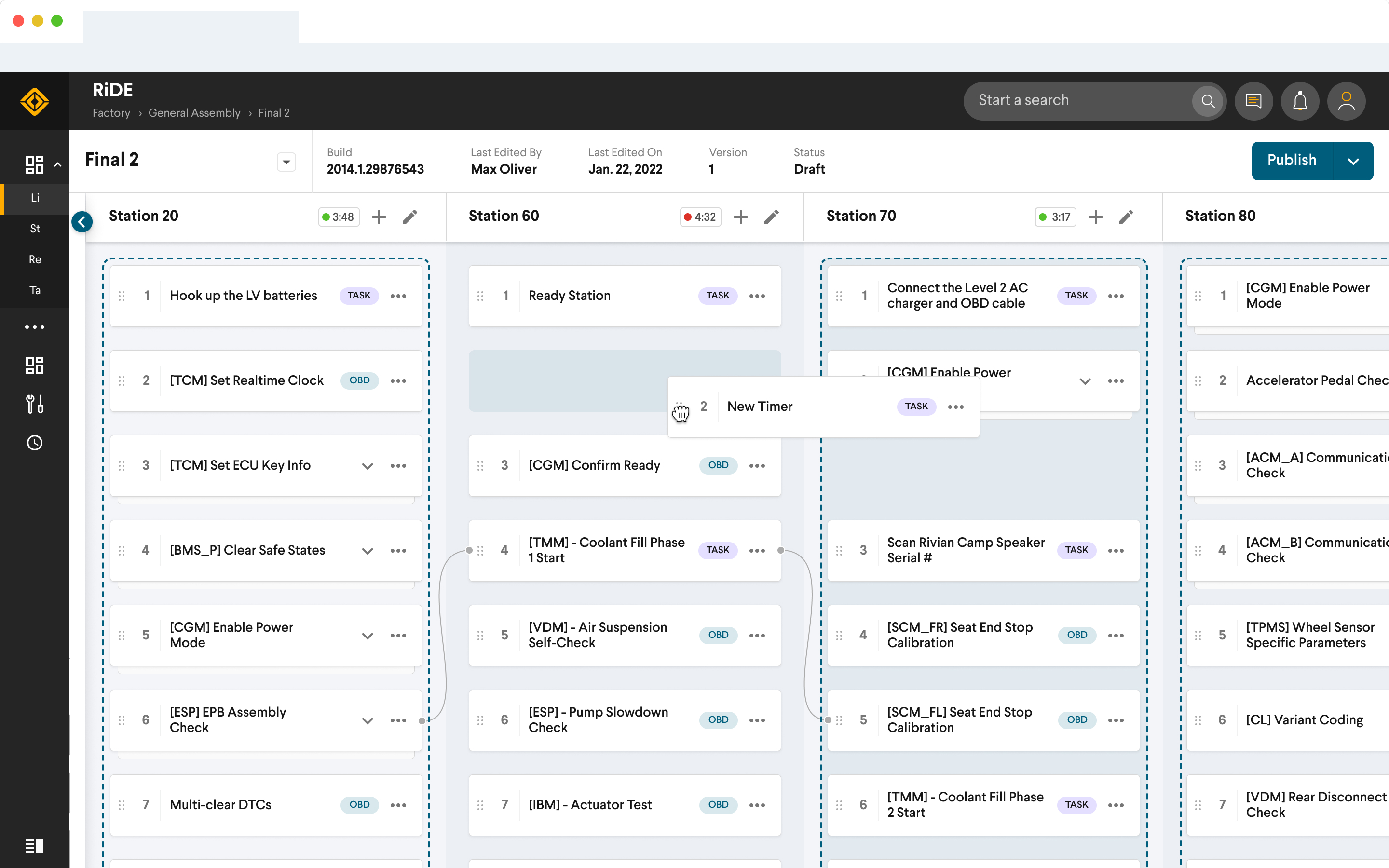
Line Balancing
Research showed that users needed a way to view multiple stations at once to view and adjust takt time.
This view allows users to view all tasks and total time for tasks per station. A user can drag tasks to another station and edit them within context.
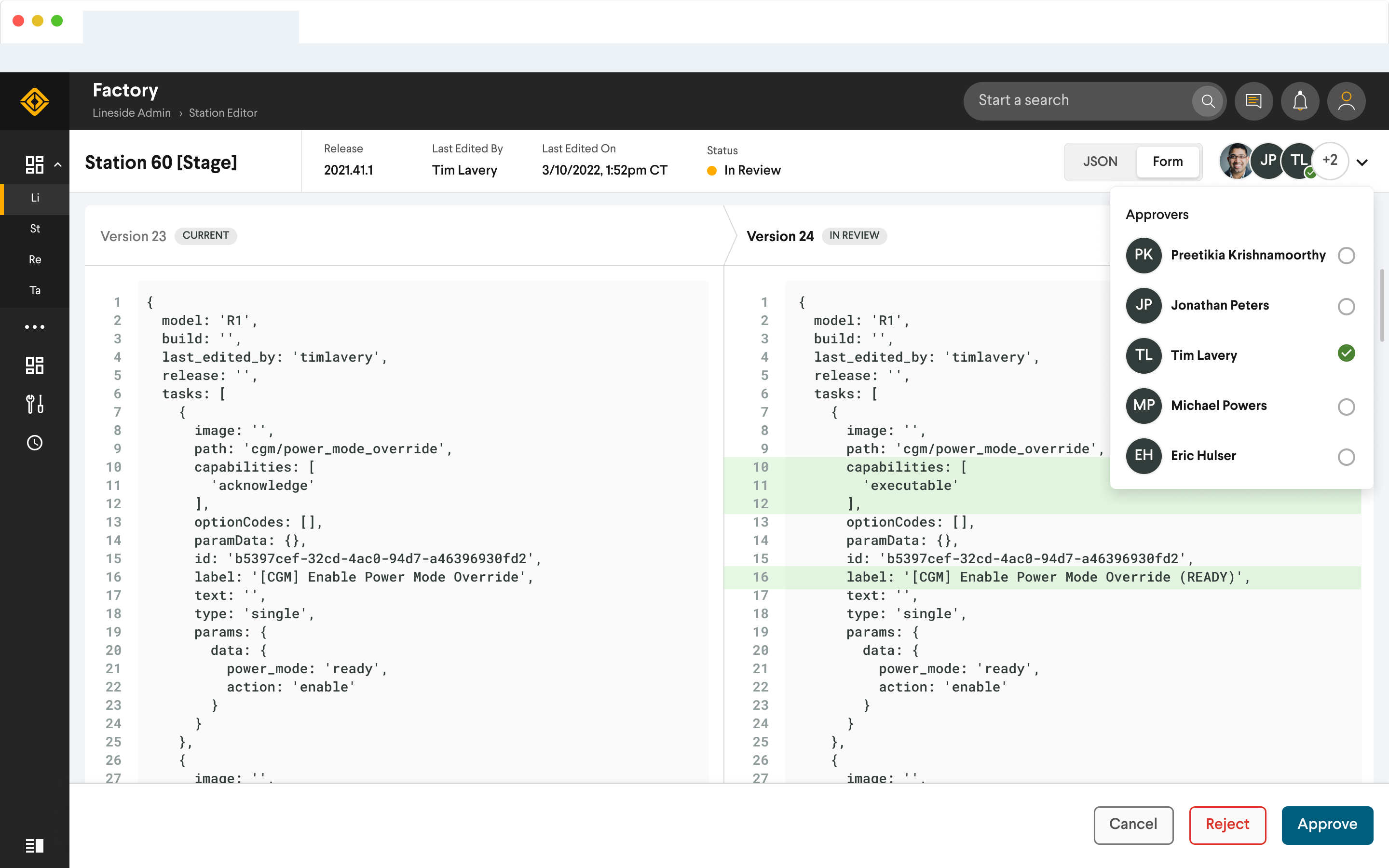
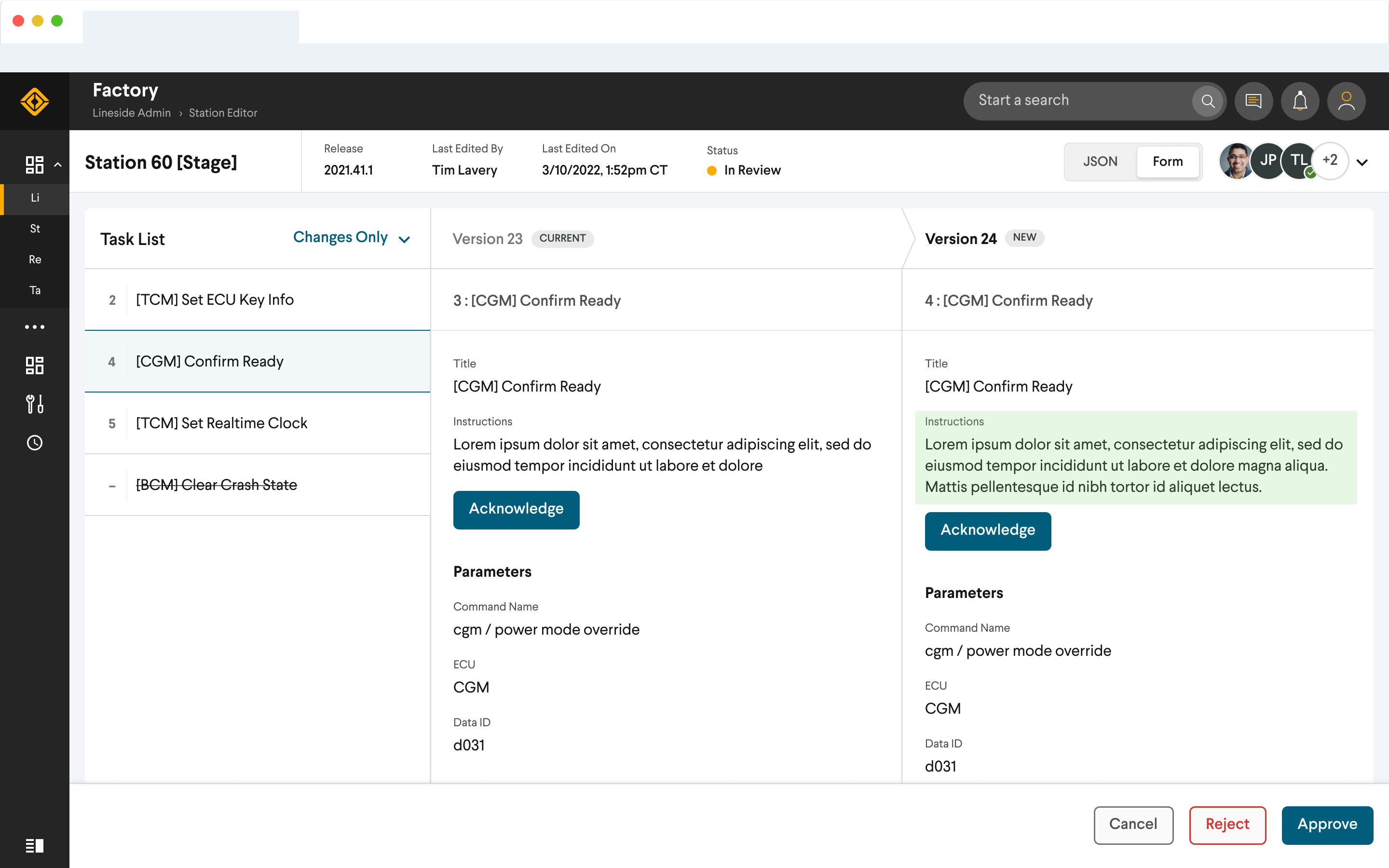
Version Control
With the need for rapid pace, users needed a way to view and control task list versions.
Putting it on the line
On the flipside of the equation, workers on the line used a touchscreen device that displayed various tasks to be completed.
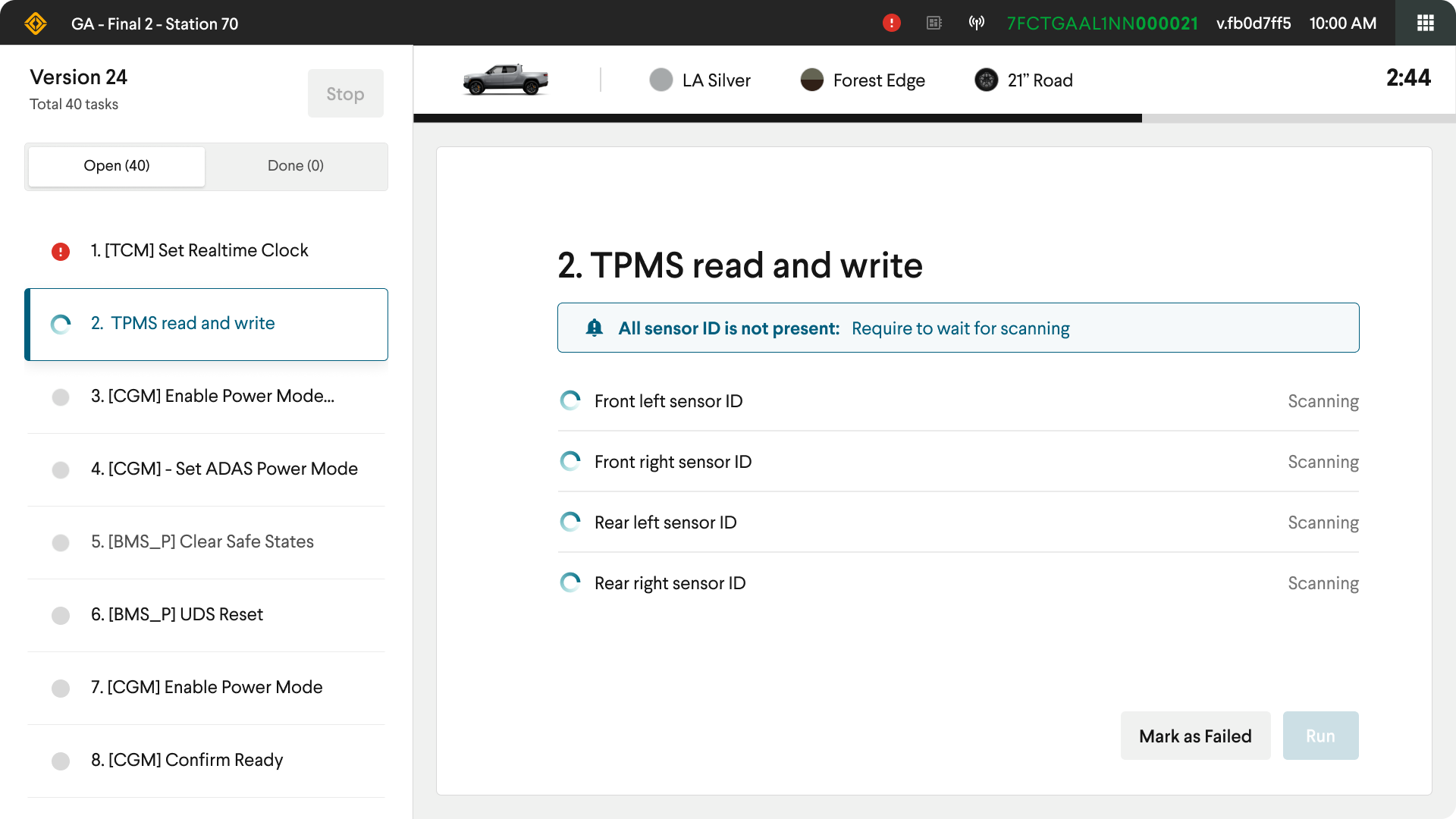
Lineside Terminal
Recipes built in the Lineside Admin tool are sent to the respective stations along the line. Only information that is important to line workers is displayed such as task names and steps.
When a vehicle enters a station, details about it are visually displayed for the user to confirm. Once ready, the user initiates the list, and completes the task actions.
A timer helps users track their total takt time for the station.
Building a faster, better future
The team faced many challenges throughout the project. EVs are very complex machines composed of many circuits and controllers running on software. The production line had to keep running while new firmware updates were being pushed out. Finding time to test new updates was also tedious.
Overall, we met our initial goals. Our work reduced the total takt time on each station to 2.5 minutes from 4 minutes. This reduction led to higher production and fewer errors that needed to be fixed before a vehicle was given the factory-ok.

