
Making the net_work
AT&T’s Network Operations wanted to improve their ability to build and operate complex densified networks faster, with better quality and at a lower cost structure than today.
my role
Design Lead through end to end process: discovery, user research, requirements, design
team
Adde Morgan, Project Manager
Will Schroeder, Visual Design
Robert Boler, Interaction Design
Andy Simpson, Interaction Design
Jackie Walsh, Interaction Design
Learning to love automation
For years, AT&T has built and operated one of the nations's largest cellular networks on multiple, disparate systems. The current processes and systems have created excess cost and has slowed time to construction.
For a site to move into the construction phase, inputs are necessary from multiple vendors and government agencies. Internal employees have to track multiple projects and have oversight of all site applications and documents, including previous versions.
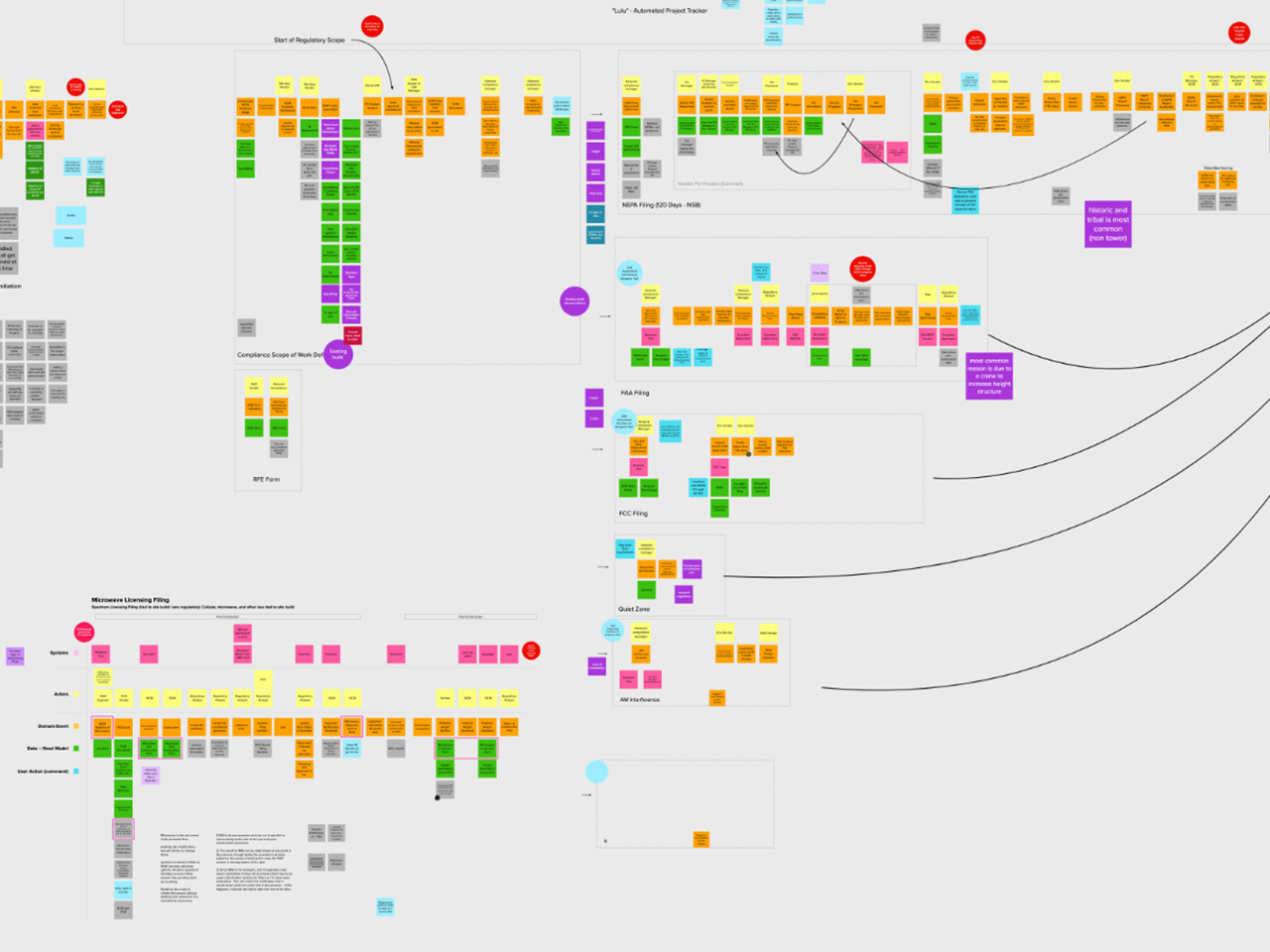
Through a series of virtual workshops, our team mapped out the current process, systems and data needed to understand the various pain points and parties involved. Regulatory, Compliance, and Licensing are key areas where multiple systems are used causing issues for internal employees and external vendors.
To push AT&T into the next generation, an event-based architecture built on automation and workflow processes would need to be implemented.
Mapping the Network of Systems
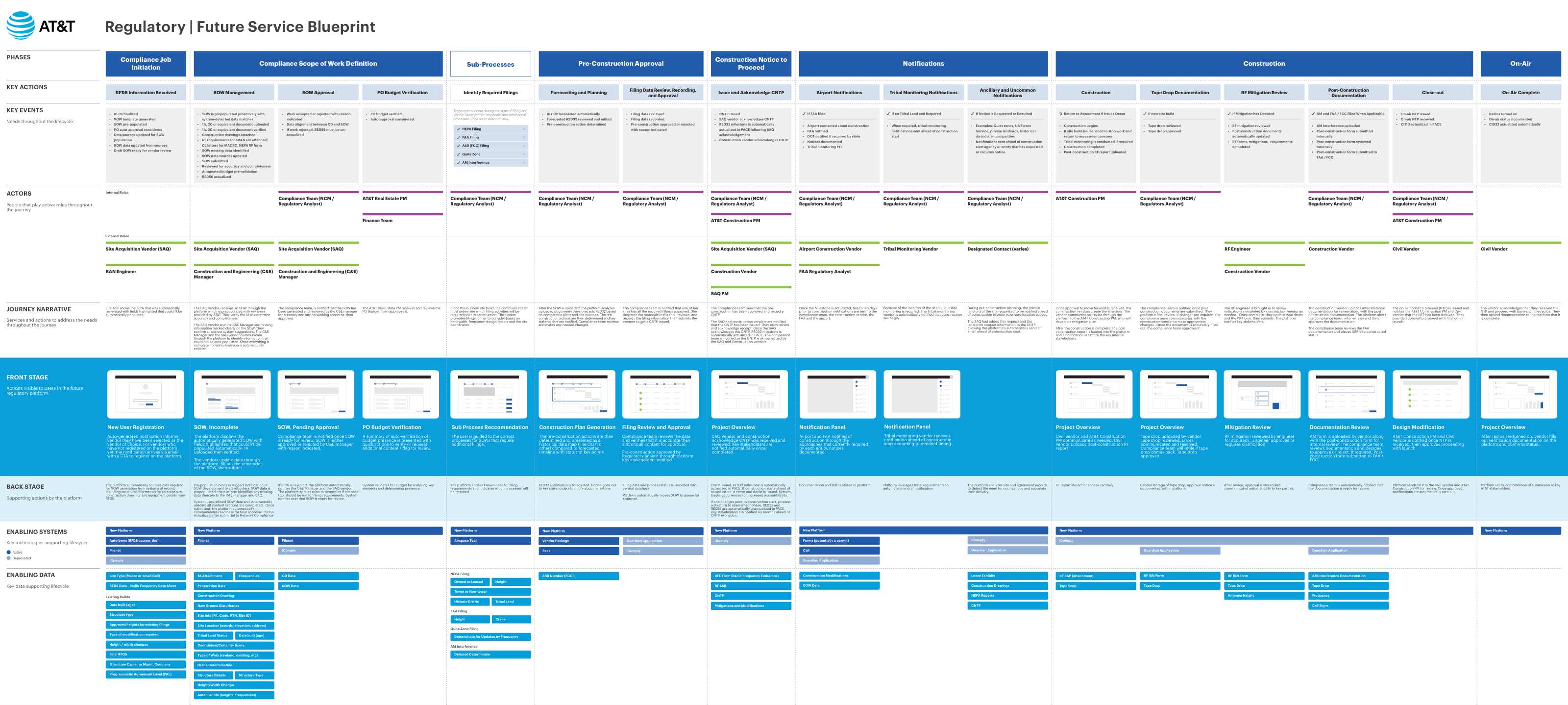
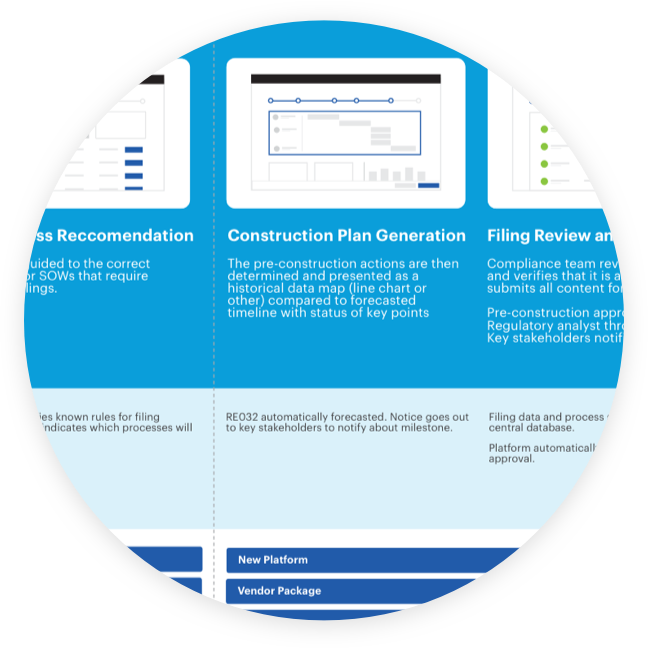
To fully understand the current state and map the future, the team created a series of service blueprints. These documents captured the various system interactions and data required to serve the various actors who had to collaborate.
Make it Workflow
The team mapped out workflows for users and the system to automate task creation and reviews based on the project type.
Core Future Capabilities
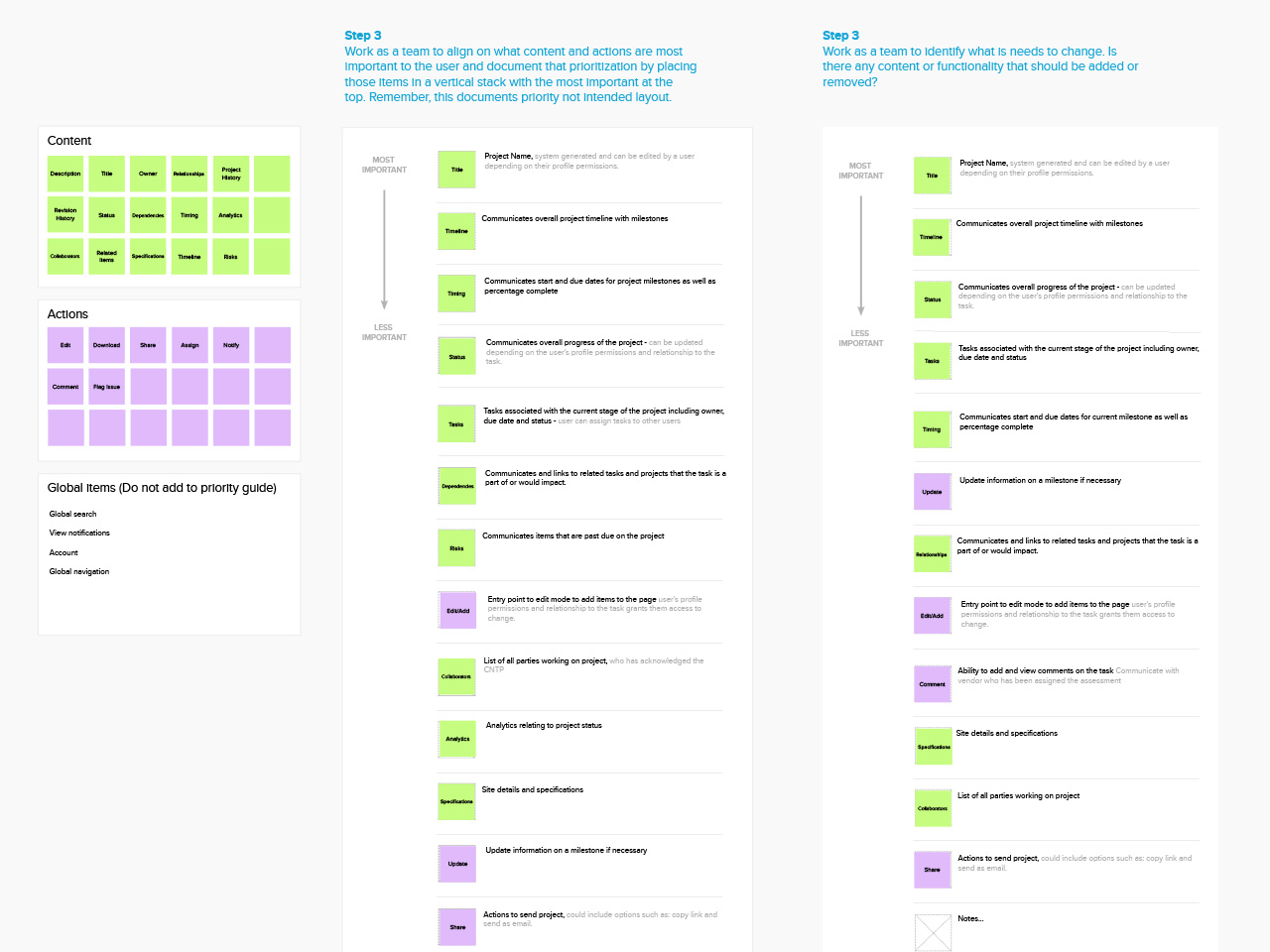
After the future service blueprint was established, key capabilities were determined for the platform. The design team used these as guideposts for wireframe development.
Identity & Access Management
Manage user identification, access, and security to allow appropriate functionality and data access
Document Management
Manage documents through the workflow process, particularly with contracts and licenses
Workflow Management
Manage flow of activities through defined processes, including procurement, SLAs, and scheduling using automation
Reporting & Analytics
Provide standard and ad hoc reports as well as advanced analysis on data
Alerts & Notifications
Automated, logic-based alerts to users including one-to-one and one-to-many
Collaboration
Allow for multiple users to simultaneously view, edit, and annotate documents in real-time
From Wireframed to Wireless
With key features defined for the future experience, the team jumped into a sprint model and created wireframes and visuals for the RAE platform.
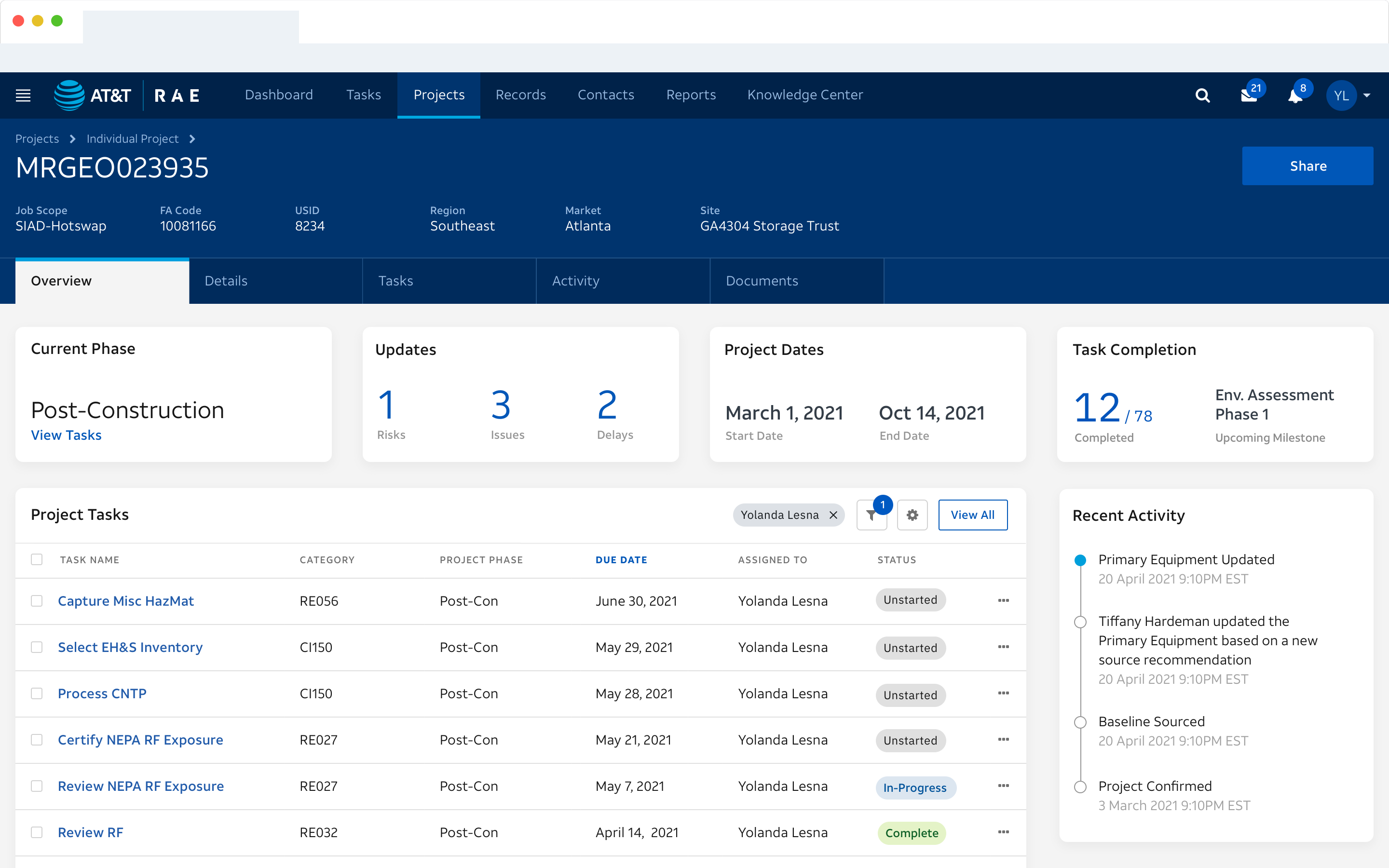
Project Overview
Internal and external vendors have access to projects and their information.
Users can easily view top-of-line info about a project site, and easily navigate between various data views.
The overview bubbles up important information for each user so they can spend less time searching for info.
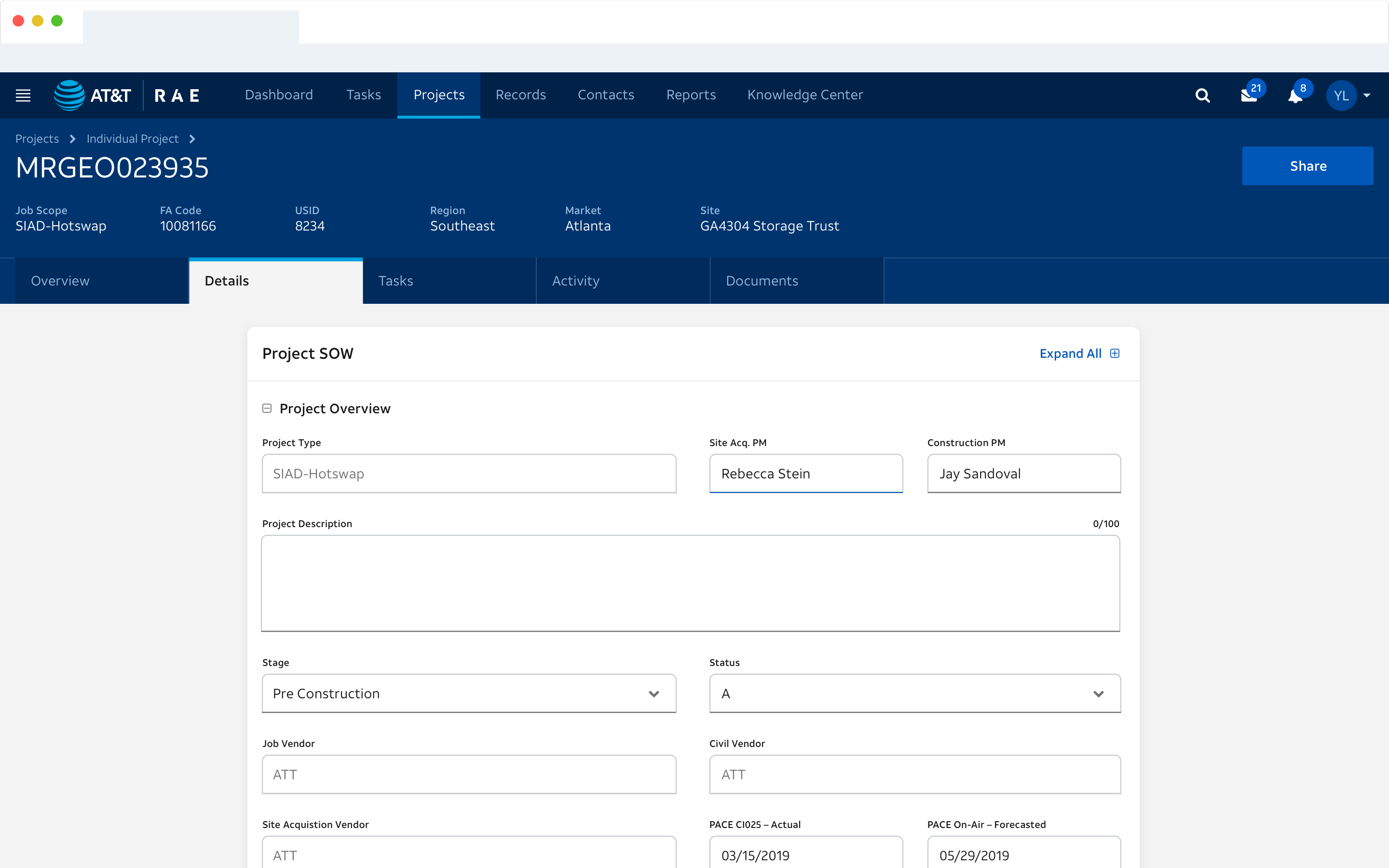
Project Details
Internal Regulatory Analysts as well as vendors have access to projects and their information.
Based on workflow events and the type of project, each user will have specific items that must be completed in the SOW for a project at any given time.
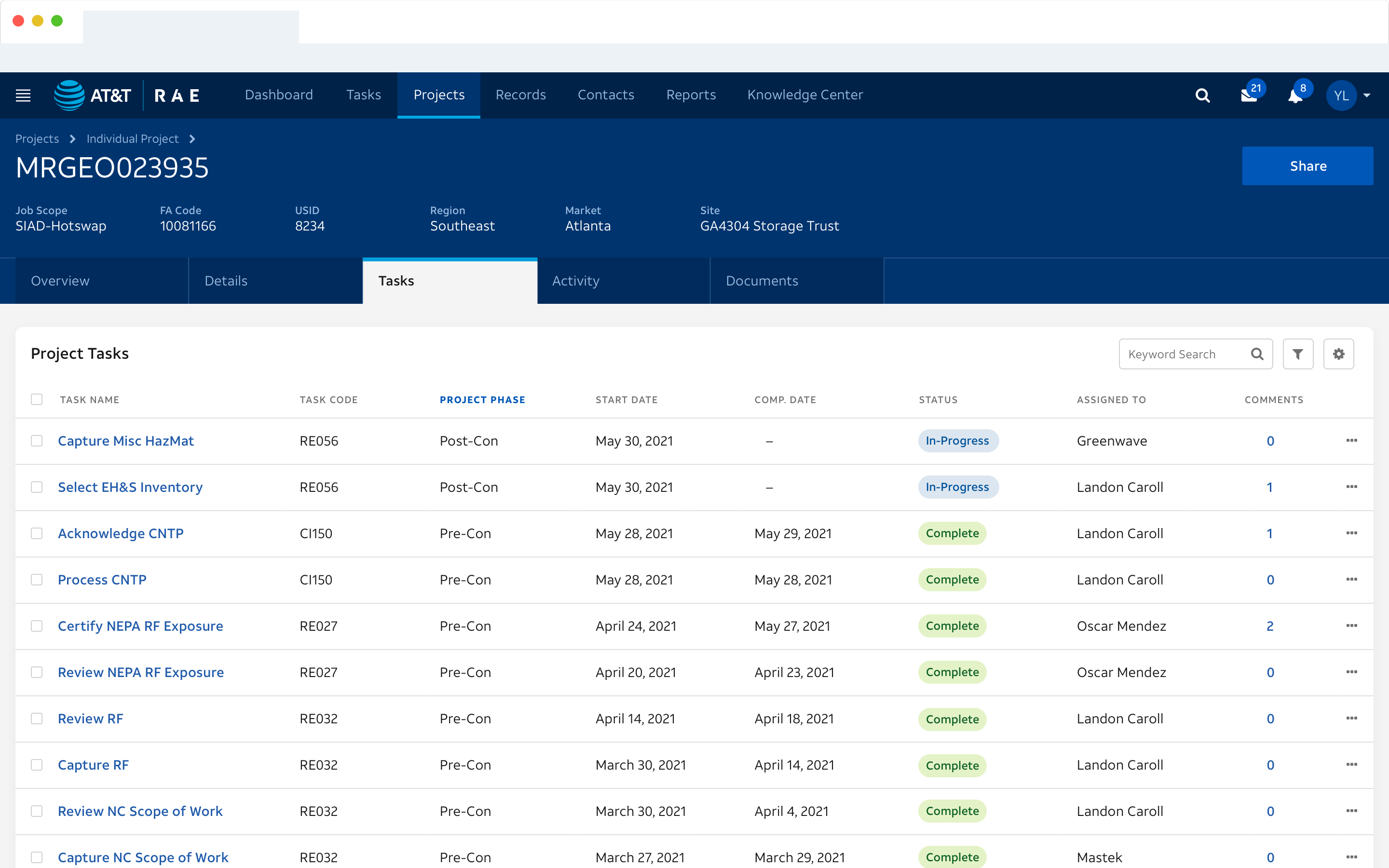
Project Tasks
Each user will have specific tasks to complete based on their permissions and the project type.
Users can filter the tasks by type, phase, data, status, etc.. They also have visibility into status and view comments made by other users on its progress.
Compliance and Project managers are able to view and reassign tasks as needed.
Setting the foundational network
To lay the groundwork for efficient design and development in the future, the team created a design system. The system consisted of foundational elements such as color library, fonts, and icons. The team also created an atomic library of widgets that can be reused on various pages throughout the platform.
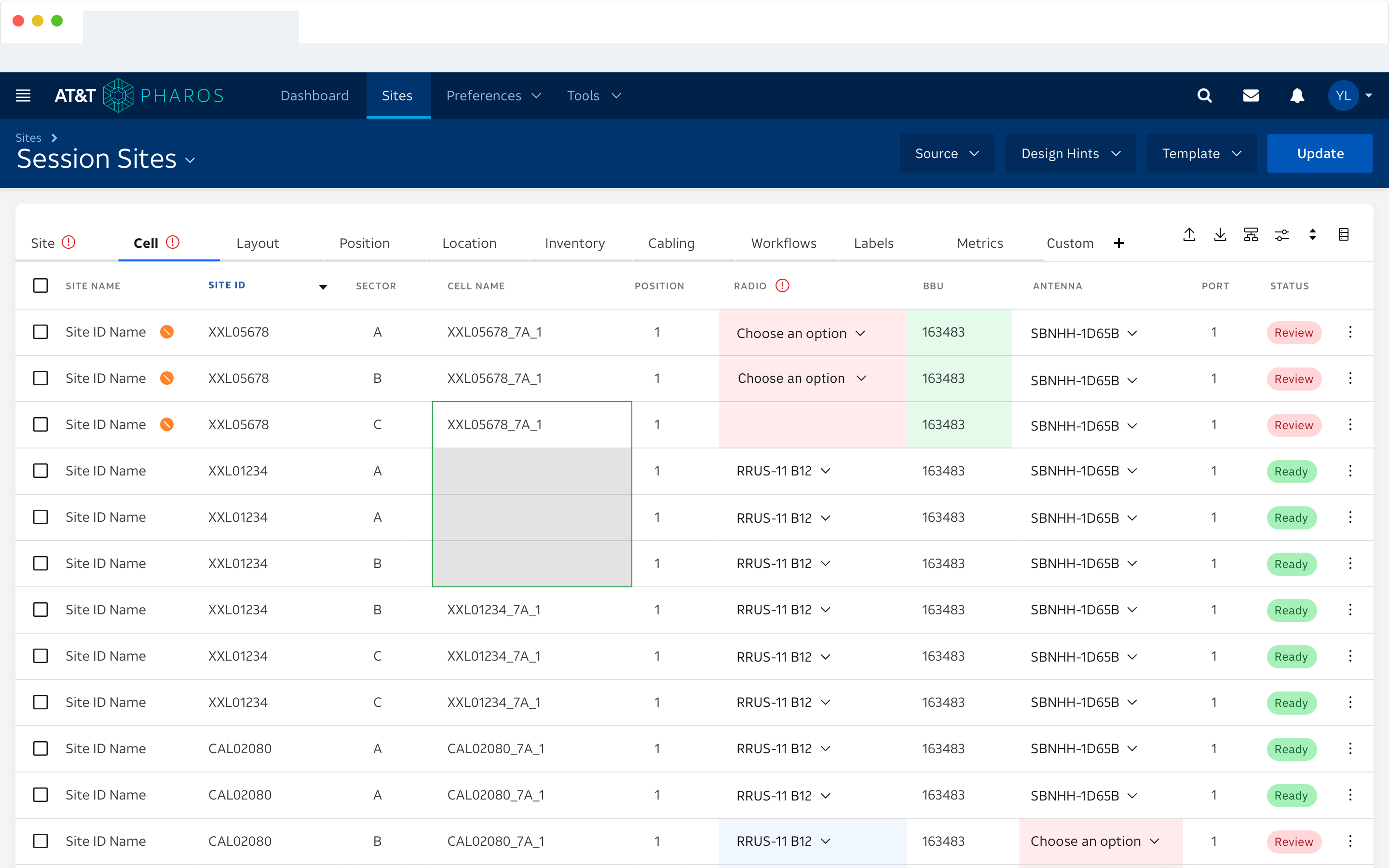
Exanding the network
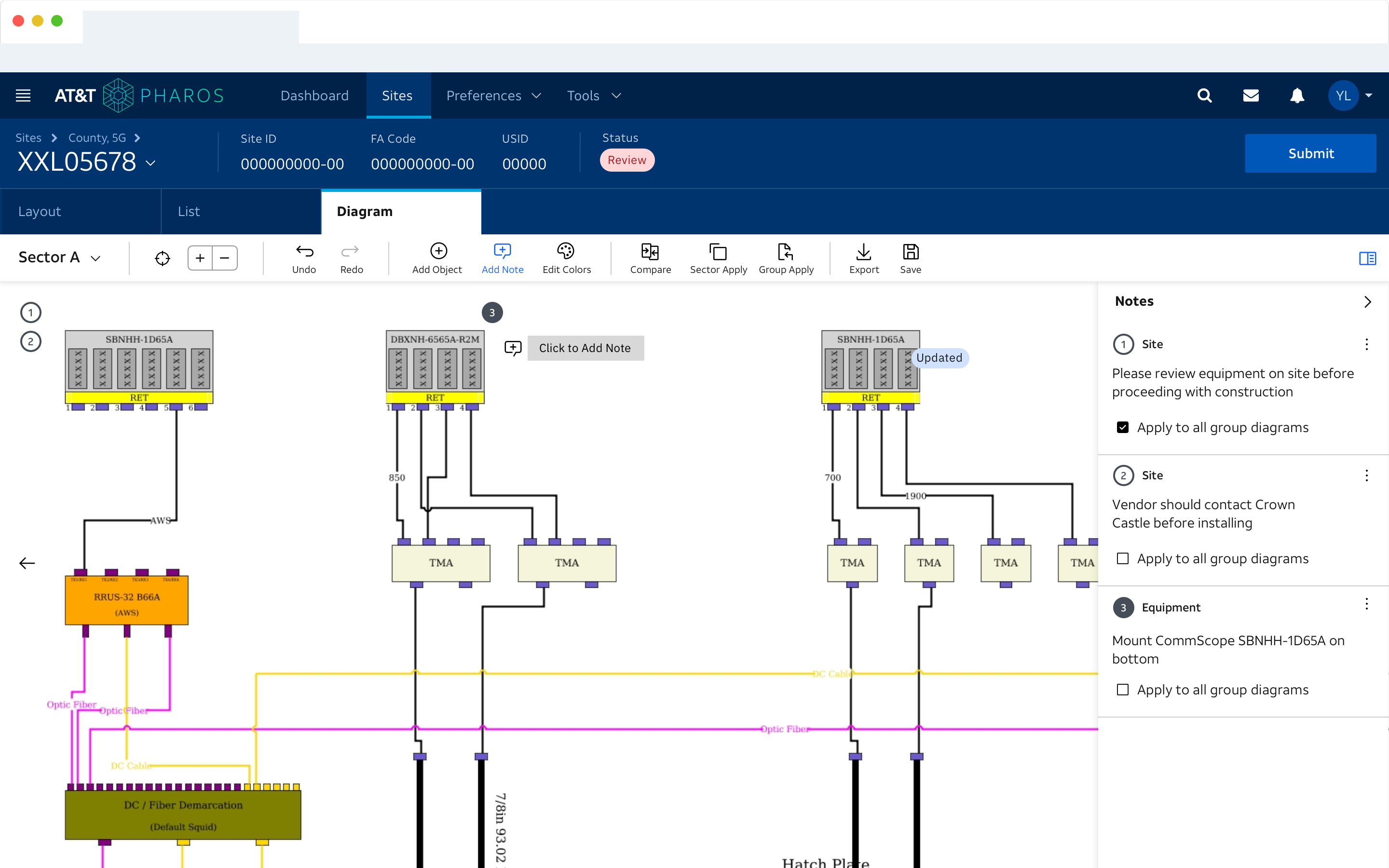
Information and design foundations were used to expand the product ecosystem
The challenge of connecting
The team faced many challenges throughout the project. Along with the normal design challenges of an enterprise product, our team had to learn and understand the customization and configurations limitations of working with a SaaS tool. Also, the design process was new to our client and team which required some education on our end.
Overall, our work laid the foundation for future AT&T systems as well as provided education to the client on how to work within an agile framework.
Despite the challenges, the project resulted in reducing the number of app tools used by 50% initially. Also, employing automation into the workflow helped to reduce the SOW process by 70% and saved over 4,667 hours in review for workers.

